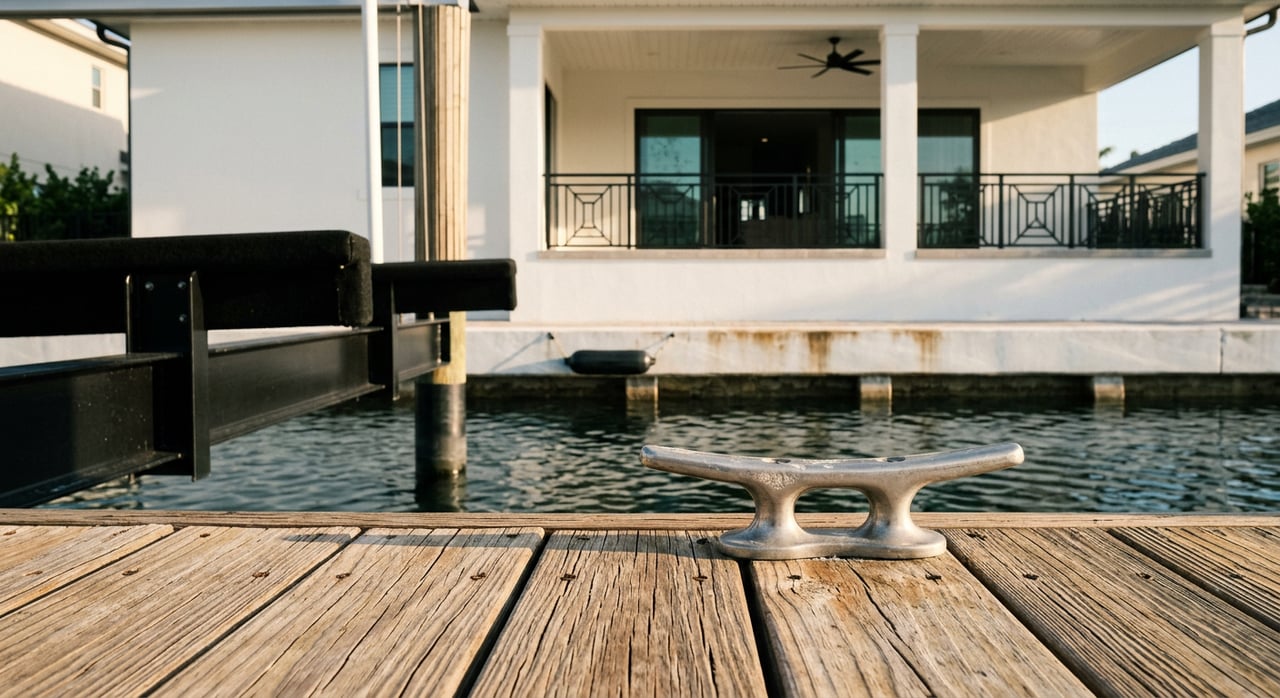
If you love the idea of walking from your back door to your boat and being on the Gulf in minutes, Royal Harbor should be on your shortlist. You want direct Gulf access, a practical dock setup, and a property that also makes sense as an investment. In this guide, you’ll learn how Royal Harbor works for boaters, what to check on docks and seawalls, pricing and rebuild considerations, and rental rules that affect returns. Let’s dive in.
Why Royal Harbor works
Location and Gulf access
Royal Harbor sits on the eastern shore of Naples Bay inside the City of Naples. From most canal lots, you run through Naples Bay and out to the Gulf via Gordon Pass. The navigation route and inlets are documented in the U.S. Coast Pilot, which covers the Naples Bay and Gordon Pass system for planning purposes (NOAA Coast Pilot, background on local inlets). Many listings describe Royal Harbor as “no-bridge” Gulf access, which means you do not pass under fixed low bridges on the way out. Always verify depth and turning room for your specific canal and lot.
Lot and home profile
Royal Harbor began building out in the 1960s, so you’ll see a mix of original ranch-style homes and newer custom builds. Over the last 15 to 20 years, many owners have remodeled or torn down older homes and built larger, modern waterfront residences. Canal frontages vary widely, and exposure, lot width, and waterfront length can be major value drivers. Because parcels differ, it pays to compare frontage, orientation, and existing dock infrastructure across options.
HOA and neighborhood feel
The neighborhood is generally non-gated and most properties do not have a restrictive HOA. Some streets or groups may have voluntary social associations. Confirm any deed restrictions, recorded covenants, or fees for each property during due diligence.
Boater essentials: docks, depth, and seawalls
Canal width, draft, and boat size
Canal widths in Royal Harbor vary, and many lots support substantial lifts and larger boats. Before you buy, confirm water depth at low tide, the permitted dock footprint, and the condition of any riprap or seawall. Ask for lift specifications, slip length, and setback limits, and then verify these details with an on-site marine inspection.
Seawalls, riprap, and permits
The City of Naples requires marine permits for riprap and seawall work on natural waterways. The city also encourages revetments in many cases and is actively inventorying seawalls while updating design and height policies. These rules affect what you can repair or build and the timelines involved. Review permit history, as-built seawall elevations, and repair records before you make an offer (City of Naples guidance on riprap and permitting).
Dredging and local navigation
Naples Bay and its channels are maintained with periodic dredging by local and federal partners. Storms and tidal action can cause shoaling, and depths can vary lot to lot. If boat access is a priority, order a marine survey that includes soundings at the dock during low tide and ask about any recent dredging or maintenance nearby. The Coast Pilot is a useful reference, but site-specific measurements are the gold standard for decision-making (NOAA Coast Pilot, navigation background).
Who to contact for work
For properties inside city limits, marine work such as docks, seawalls, and riprap flows through the City of Naples permitting process. Depending on the scope and location, state or federal permits may also be required. Always confirm permit status and approvals before modifying the shoreline or dock (City of Naples marine permitting overview).
Value and rebuild economics
Price positioning vs. Port Royal and Aqualane
Royal Harbor offers direct Gulf access and proximity to downtown Naples at a lower price point than Port Royal and Aqualane Shores. Lot sizes, bayfront positioning, and an older housing stock that invites rebuilds all contribute to this relative value for boaters and investors. Local neighborhood guides often describe Royal Harbor as a smart alternative for Gulf-access living (Royal Harbor’s comparative value for boaters).
Remodel or tear down: what to know
If you plan to remodel or build new, your budget will be shaped by flood elevation requirements, seawall condition, and current hurricane-resistance standards. The City of Naples has been updating seawall elevation guidance as part of its adaptation planning, and many seawalls date from the 1950s to 1980s. Before you buy, obtain an elevation certificate, a seawall condition report, and realistic contractor estimates for foundation and shoreline work. These factors can materially change your total project cost (City of Naples adaptation and seawall policy materials).
Taxes and insurance
High-value waterfront parcels pay meaningful property taxes, and carrying costs often include flood and wind/hurricane insurance. Request quotes early in your due diligence so you can model realistic annual costs. If you plan to rent seasonally, also factor in applicable sales and tourist taxes.
Rental potential and rules
City vs. County: which rules apply
Royal Harbor is inside the City of Naples. That means City rules govern rentals, not Collier County’s short-term rental registration program. The County’s registration, certificate, and local responsible party requirements do not apply within city limits. Always verify jurisdiction and follow the correct process for your parcel (Collier County short-term rental program overview).
Short-term rentals in the City of Naples
The City of Naples has historically taken a restrictive approach toward short-term rentals of single-family homes, including limits on advertising and duration. Investors should not assume nightly rentals will be allowed for a Royal Harbor single-family property. Review the City’s current code and consider consulting a local real estate attorney for clarity before you buy (overview of City vs. County rental limits).
Taxes on rental income
Short-term rental income in Florida is generally subject to the 6% state sales tax plus local tourist development taxes. Collier County has applied a 5% Tourist Development Tax in recent years. Registration and remittance requirements vary by jurisdiction and platform, so confirm the latest rates and steps with the appropriate agencies (FGCU tourist tax dashboard for Collier County).
Practical rental strategy
Given the City’s restrictions, many Royal Harbor owners favor seasonal leases such as 3 to 6 months during winter or longer annual rentals rather than nightly stays. If short-term rental income is essential to your plan, consult the City of Naples, a local attorney, and the appropriate state agencies to explore compliant options and timelines.
Your due diligence checklist
Use this quick list to evaluate any Royal Harbor canal home:
- Confirm city jurisdiction. Royal Harbor lies within the City of Naples, so City rules apply for rentals and permitting. Do not rely on County registration for parcels inside city limits (County program summary for contrast).
- Verify navigability. Order a marine survey with low-tide soundings at the dock, ask about nearby shoaling, and confirm the turning basin and channel route to Gordon Pass (NOAA Coast Pilot context).
- Pull dock and seawall permits. Request as-built drawings, permit history, and current seawall elevation; repair or riprap work requires City permits (City of Naples riprap and seawall page).
- Document boat infrastructure. Confirm lift capacity, slip length, setbacks, and electrical setup with on-site inspection.
- Check flood and insurance. Get a current Elevation Certificate and quotes for flood and wind/hurricane coverage; seawall and foundation standards impact rebuild costs (City adaptation and seawall policy materials).
- Review zoning and covenants. Look for any recorded restrictions that affect rentals, exterior changes, or waterfront work.
- Model rebuild economics. Price seawall, dock, and foundation upgrades along with modern wind-resistance requirements, then compare total project cost to recent comparable sales.
- Plan tax compliance. If renting, confirm City rules, register where required, and plan for state sales tax and local tourist development tax collections (tourist tax data reference).
Next steps and how we help
Royal Harbor rewards careful planning. When you evaluate a canal property, the best path is a coordinated approach: verify jurisdiction and rental rules, order a marine survey, gather dock and seawall permits, and review rebuild costs against your goals. With the right due diligence, you can enjoy true Gulf access while protecting long-term value.
If you want a local, concierge-style guide through this process, we’re here to help. From lining up marine and seawall experts to reviewing permits and insurance considerations, our team can streamline each step and help you secure the right Royal Harbor property for your lifestyle and investment goals. Ready to explore? Schedule a private consultation with The Laurel McGarel Group of Realty ONE Group MVP.
FAQs
What does “no-bridge” Gulf access mean in Royal Harbor?
- In Royal Harbor, “no-bridge” typically means you can reach the Gulf via Naples Bay and Gordon Pass without passing under fixed low bridges. Depth, canal width, and turning room still vary by lot, so get a marine survey and confirm your route using resources like the NOAA Coast Pilot.
How big of a boat can I keep at a Royal Harbor canal home?
- It depends on your canal’s width, the dock’s permitted footprint, lift capacity, and depth at low tide. Many homes support substantial lifts, but only an on-site marine survey and a review of dock permits can confirm what your lot can safely handle.
Can I rent my Royal Harbor single-family home short term?
- Royal Harbor is in the City of Naples, which has historically taken a restrictive approach to short-term single-family rentals. Do not assume nightly rentals are allowed; review the City’s current code or consult a local attorney for specifics (City vs. County rental overview).
Do I need a permit to repair my seawall or add riprap in Naples?
- Yes. The City of Naples requires permits for seawall and riprap work on natural waterways. Confirm permit history, as-built elevations, and approvals before starting any marine construction (City of Naples riprap and permitting guide).
How does Royal Harbor pricing compare to Port Royal and Aqualane Shores?
- Royal Harbor offers direct Gulf access at lower per-foot prices than Port Royal and Aqualane Shores, partly due to lot sizes and an older housing stock that invites remodels or rebuilds. Many buyers see it as a value play for boaters seeking Naples Bay access (Royal Harbor comparative value).